
At the School of Veterinary Medicine and Biomedical Sciences (SVMBS), we’re proud to lead Nebraska in veterinary education, research, extension, and outreach. Whether your passion lies in becoming a veterinarian or conducting groundbreaking research on diseases that impact both animals and humans, SVMBS is where your journey begins. Here, you'll find the resources, mentorship, and hands-on experience to turn your aspirations into impact.
We're hiring Faculty position!
School highlights
Desaulniers, McFee earn national NACTA awards for excellence in teaching
Amy Desaulniers and Renee McFee, professors in the University of Nebraska–Lincoln’s School of Veterinary Medicine and Biomedical Sciences, are receiving high honors from the North American Colleges and Teachers of Agriculture. Desaulniers is receiving the 2026 NACTA Educator Award, and McFee is receiving the NACTA Teaching Scholar Award, recognizing their excellence in postsecondary agricultural education.

Nebraska Veterinary Diagnostic Center Receives Governor's Award
The Nebraska Veterinary Diagnostic Center has received the Governor’s Excellence in Ag Partnership Award for its scientific excellence and support of Nebraska agricultural stakeholders. Gov. Jim Pillen presented the award at the 2025 Governor’s Summit in Kearney on Aug. 13.
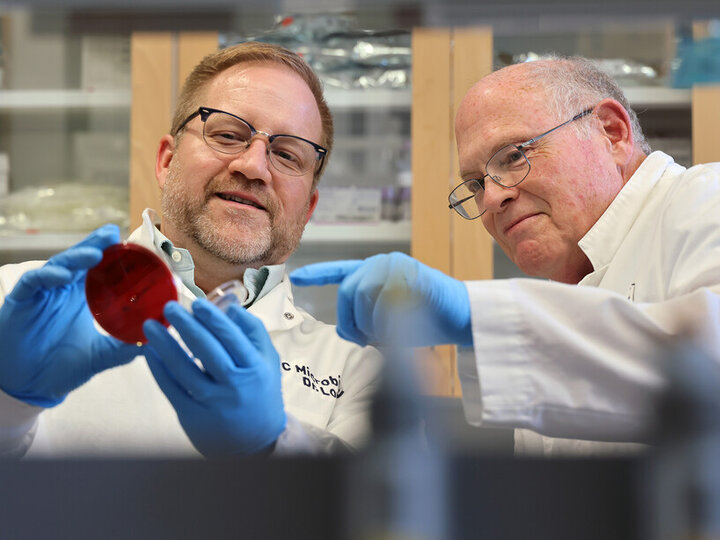
Facility changes build on Husker swine research momentum
By Dan Moser
Recent facility improvements at the University of Nebraska-Lincoln have given a boost to the university’s swine research, critical to the state’s industry and efforts to feed a growing global population.

3+2 program gives students a boost toward veterinary study
A university can often serve students best by getting creative in structuring its academic programs. Two aspiring veterinary medicine students graduating May 20 from the University of Nebraska–Lincoln have found that in the university’s Veterinary Medicine 3+2 program.


