SVMBS Academic Program Reviews
The School of Veterinary Medicine and Biomedical Sciences is the center of education in veterinary medicine and biomedical sciences in Nebraska. This section describes in more detail each program (teaching, research, extension) and unit (Nebraska Veterinary Diagnostic Center, Great Plains Veterinary Educational Center) within the School.
Providing high quality undergraduate, graduate and professional education that is affordable, accessible, and prepares graduates for a variety of careers related to animal health and veterinary medicine is among the leading priorities of the School. Complementary and equally important are the service and outreach missions of the NVDC and Nebraska Extension. SVMBS research programs also are essential and provide basic science scholarship as well as applied science relevant to all SVMBS missions. These mission areas are consistent with the principles and goals of the University of Nebraska, UNL and IANR.
Undergraduate Degree Programs
Program Coordinator: Roberto Cortinas
Vision
The SVMBS undergraduate program will be the comprehensive center of exceptional educational preparation in Nebraska, the region and across the U.S. for a career in veterinary medicine and biomedical sciences.
Description
Two undergraduate majors—veterinary science and veterinary technology—lead to a Bachelor of Science degree in veterinary science and in veterinary technology, respectively. A third nondegree major, pre-veterinary medicine, is offered by CASNR and managed by faculty and academic staff housed in SVMBS and the Department of Animal Science. SVMBS offers 19 undergraduate courses, seven of which are cross listed with other programs including the Pre-Vet program, biology, and other CASNR degree programs. Eight of the courses are 400/800-level courses. A 12-hour minor in veterinary science is also available.
Majors
Veterinary Science Major
The veterinary science major focuses on animal health. Students may choose the biomedical sciences or a veterinary medicine (“3 + 2”) option. Most students declare the biomedical sciences option but the few undergraduates who are accepted into a veterinary program early in their academic careers switch to the veterinary medicine option and complete the degree by the second year of veterinary school. Most students who major in veterinary science want to become veterinarians but less than half will go on to a veterinary college. The remainder of students pursue other careers or graduate education.
The undergraduate curriculum committee (UCC) has reviewed and made several changes to the curriculum since 2014. Historically, the core of the veterinary science degree program has been based on the Nebraska resident veterinary school admission requirements. Prior to 2008, it was based on the KSU PPVM requirements, and currently it is based on the admission requirements for the ISU-UNL PPVM. As admission requirements have changed, so has the core. For example, second-semester organic chemistry and second-semester physics have been removed from the core and been placed in the options so that students applying to other PPVM programs that require those courses can receive credit towards graduation. Yet, the curriculum is also evaluated to ensure that undergraduates are prepared for upper-level VBMS courses as well as careers in the biomedical sciences.
A faculty retreat held in 2018 and a subsequent faculty survey in 2020 identified strengths and weaknesses of the undergraduate curriculum, resulting in the addition of cell biology and immunology to the core of the veterinary science degree. In 2020, the UCC reviewed campuswide courses and updated the courses that make up the biomedical component of the option. We have also worked with other departments and schools including the School of Biological Sciences (Immunology and Microbial Physiology) and the School of Natural Resources (Wildlife Medicine) to cross list courses to strengthen the undergraduate programs. We also have created placeholder courses for experimental courses to encourage faculty course development, and we created the first VBMS second-year course to begin to address issues of student retention in the program (see Program Challenges below).
Veterinary Technology Major
The veterinary technology major requires that students earn an associate of applied science degree (AAS) in veterinary technology from an American Veterinary Medical Association accredited program and pass the Veterinary Technician National Licensing Exam in addition to completing the other requirements of the program. The AAS degree is not offered at UNL. Students may complete the AAS degree before or after completing the baccalaureate requirements at UNL. This degree program offers a broader education than is available in an AAS degree program and attracts those who want additional education related to animal health, including technicians who want to apply to a professional veterinary program.
The veterinary technology major has no options though it used to have three: 1) a business option, 2) a veterinary science option, and 3) a science option. The business option was discontinued because of lack of faculty focus/expertise/advising in veterinary business and a lack of foundational coursework in VBMS. The veterinary science option was also removed due to the changes in the ISU-UNL PPVM requirements, leaving only what was then known as the science option.
Pre-Veterinary Medicine Major
Pre-Veterinary (PVET) Medicine is a non-degree granting major that provides students interested in pursuing a D.V.M. the educational background needed to meet the application requirements of veterinary colleges. The program is maintained by CASNR and overseen by the Pre-Vet Coordinating Committee, made up of faculty and academic staff in SVMBS and the Department of Animal Science. The pre-vet designation is available to students interested in applying to any veterinary college. This major is maintained by CASNR. Pre-vet students are strongly encouraged to select a degree-granting major by the end of their second year of study. The most popular majors include animal science, fisheries and wildlife, and veterinary science, though a few students choose biochemistry or food science and technology.
Recruitment
In 2012, SVMBS created a position for a recruiting/retention coordinator and hired an individual with a background in UNL admissions, and recruitment and advising experience. In 2013, an undergraduate program coordinator was appointed. Filled by a faculty member, this position coordinates undergraduate advising and works closely with the recruiting/retention coordinator on recruitment activities and new-student engagement.
In 2017, CASNR reorganized recruitment efforts for the pre-veterinary and animal science programs. The reason was to reduce conflicting pre-vet messaging to students and parents, as well as to focus recruitment, retention, advising efforts. The Pre-Veterinary Coordinating Committee was established, the previous recruiting/retention and advising positions changed into a Pre-Vet/SVMBS recruitment coordinator and a Pre-Vet advising/ retention coordinator. The undergraduate program coordinator works with the Pre-Vet advisor and coordinates advising of SVMBS undergraduates. Any student who is planning to apply to a veterinary school is tagged as a PVET, regardless of department or college of major.
Recruitment messages are individualized to students by their state of residence and career interests. Because students who visit campus are more likely to attend UNL, special effort is focused on events that bring students to campus.
Enrollment
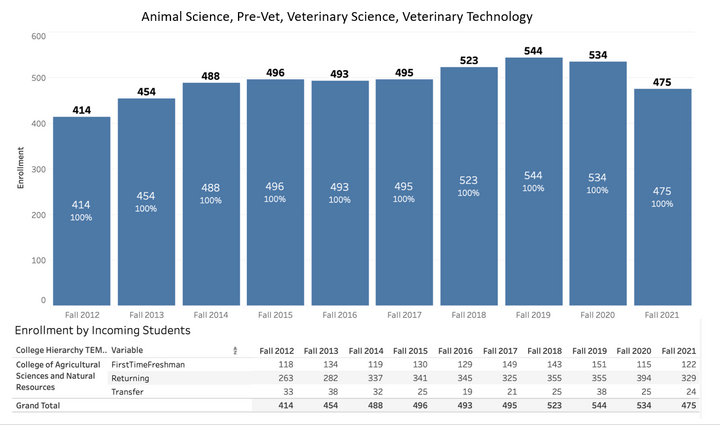
Figure 5 illustrates enrollment trends from 2012 through 2021. The figures are six-day census numbers reported by UNL Institutional Research and Planning. An appreciable number of animal science students want a career in veterinary medicine so enrollment in that program is included (Figure 6).

Program Strengths and Opportunities
Undergraduate education is a main priority at UNL and in CASNR, and SVMBS recruiting efforts are supported at both levels. UNL admissions and CASNR recruiters represent the pre-veterinary program in many venues, including out-of-state markets. Additionally, SVMBS has used several targeted campaigns to contact potential students and invite them to visit campus and attend recruiting events.
The pre-vet major and the fact that upper-division undergraduate veterinary science courses are taught by PPVM faculty are very strong selling points for prospective students and their parents. SVMBS is positioned to use existing resources to develop additional learning opportunities not often found in undergraduate programs:
- Experiential learning with large animals at the Great Plains Veterinary and Educational Center
- Student employment at the Nebraska Veterinary Diagnostic Center, the Agricultural Research Division, or in SVMBS research laboratories
- Instruction from professional faculty, many of whom are veterinarians
Mentorship from advisors, many of whom have a professional veterinary background.
Program Challenges
Incoming undergraduate students can matriculate at UNL as a pre-veterinary major. When that occurs, they are identified in the UNL student information management system (SIS) as a PVET major. After initial enrollment and completing VBMS 101 the fall semester of their freshman year, there is a communication gap with veterinary science students because they do not take another VBMS course until their junior or senior year. We have begun addressing this by creating experimental courses under the Special Topics (VBMS 291 and VBMS 391) designations so that faculty are encouraged to develop new courses targeted to students in their sophomore and junior years. Courses found to be of interest and that promote student learning and engagement with veterinary and biomedical studies will be converted to permanent course offerings in the VBMS core curriculum.
The current recruiting philosophy is “to be a vet, start with pre-vet.” The intent is to identify students wishing to be veterinarians before they declare a degree major. As a result, the pre-vet adviser, as well as advisers in SVMBS and the Department of Animal Science, provide pre-vet advising to any student, regardless of the student’s academic major, UNL college or post-secondary school of enrollment.
The pre-vet advisor provides pre-vet advising through completion of the undergraduate program. Any student in any major who is planning to apply to a professional veterinary program is advised by the pre-vet advising/retention coordinator. Students in SVMBS are advised by SVMBS faculty who serve as mentors. Faculty advisors are matched with students who share interests, such as pathology, microbiology, or wildlife health.
A significant reduction in the enrollment in prevet occurs for two reasons:
- Student self-selection away from prevet when the student decides veterinary medicine is not their professional goal. This can occur at any time during the undergraduate career but is most noticeable after the first academic year of enrollment.
- Pre-vet students are urged to declare a degree-granting major by the end of their sophomore year, even though they continue to aspire to a career in veterinary medicine. Many students migrate to a degree-granting program by the end of their first year of enrollment.
Anecdotally, some students avoid veterinary science as a degree-granting major because:
- It is perceived to be a more difficult curriculum than other majors.
- They do not understand what career opportunities are possible with a B.S. in veterinary science.
- Students seek programs that offer financial assistance to help fund their education, and SVMBS has a limited amount of scholarship money available to undergraduate students.
An increase in VBMS enrollment could be achieved with greater attention being paid to the needs of non-vet-school-bound students in the veterinary science major and with a greater amount of scholarship money to support them.
Although the pre-veterinary program helps qualify students to enroll at any veterinary college, prospective out-of-state students often lose interest in UNL for their undergraduate studies because they are not eligible to enroll in the UNL/ISU-CVM Professional Program in Veterinary Medicine.
Additional challenges include:
- There is currently no mechanism within the School for connecting with SVMBS alumni.
- Lack of an undergraduate home/space in VBS.
- Lack of distinct identity beyond pre-vet/ PPVM-prep.
- Lack of emphasis on the biomedical science programs and opportunities.
- Lack of partnerships with industry and government to create experiential activities, job opportunities, and internships.
- Faculty buy-in to undergraduate teaching and advising, potentially creating a pipeline of students to the graduate program.
- Insufficient opportunities for development of communication skills, both written and oral.
Experience is important in preparing students to enter a career or to apply to graduate or professional school. Currently, SVMBS undergraduate degree programs do not have degree-specific experiential learning opportunities such as an internship. Students intending to apply for admission to vet school are urged to explore veterinary medicine by volunteering or working in a veterinary clinic, but few use that experience to earn academic credit, such as could happen under VBMS 496 – Independent Study.
Goals
- Add course and experience options in companion animal management, research animal management, and comparative biomedical sciences to the veterinary science major to expand the career options available to veterinary science graduates.
- Increase distance education opportunities that allow more students access to SVMBS undergraduate educational programs.
- Collaborate with the Nebraska College of Technical Agriculture, a two-year technical college within the University of Nebraska system, to deliver its AVMA-accredited AAS veterinary technician degree program.
- Provide undergraduate students with opportunities to gain veterinary related animal experience as part of the SVMBS undergraduate programs.
- Explore ways to make SVMBS programs more affordable and accessible to all students.
- Reach and maintain 2025 targets for a 4-year graduation rate of 55%, a 6-year graduation rate of 72%, a first-to-second-year retention of >85% — all while decreasing equity gaps.
Professional Program in Veterinary Medicine
Program Coordinator: Dr. Renee McFee
SVMBS is the home of the Professional Program in Veterinary Medicine, a cooperative program between UNL College of Agricultural Sciences and Natural Resources and Iowa State University College of Veterinary Medicine. The UNL PPVM is accredited by the American Veterinary Medical Association Council on Education (AVMA COE) as part of the ISU-CVM accreditation.
The PPVM was established in 2006 to provide education and training to Nebraska resident students who are accepted into the ISU D.V.M. program, and to provide an opportunity for both Nebraska and ISU-CVM students to experience enhanced clinical care in food-animal medicine at the Great Plains Veterinary Educational Center.
In general, years one and two of the curriculum are offered by UNL faculty and years three and four are offered at ISU. One first-year course is delivered to ISU students by UNL faculty and one second-year course is delivered to UNL students by ISU faculty. Fourth-year clinical rotations/preceptorships are offered in both states, including at GPVEC.
UNL and ISU are responsible for determining the outcomes and core competencies expected of entry level veterinarians, and each institution is responsible for ensuring their respective curricula results in students meeting those outcomes and competencies. A standardized instrument (the VEA) is administered to all UNL/ISU students during the third year of the program. Results are used to make adjustments in curriculum at both institutions.
The Veterinary Educational Assessment (VEA) is a comprehensive, independent assessment of knowledge in basic veterinary medical sciences. The five main content areas are anatomy, physiology, pharmacology, microbiology, and pathology. This standardized test allows schools to compare the performance of their students to that of students from other veterinary schools. Over the past five years, ISU students have earned significantly higher scores 10 times (Anatomy = 2016/2017/2021, Physiology = 2016, Pharmacology = N/A, Microbiology = 2016/2017/2021, Pathology = 2016/2017/2021) or 40 percent of the time.
Academic Standards and Student Code of Conduct
The UNL academic standards must meet or exceed those of the AVMA COE, and UNL’s standards must meet or exceed those of ISU. Students are subject to the rules, regulations, and procedures of the institution where they are physically present. Any misconduct at UNL must be disclosed to ISU.
Curriculum
Year one and two core courses total 79 credit hours. UNL offers up to 14 credit hours of electives each year. Additional ISU electives are available remotely for Nebraska students.
Admission
Over the last five years a mean of 74 applications from Nebraska residents were received, which is 2.9 applicants per each available position. ISU establishes:
- Admissions requirements (prerequisite coursework, CASPer situational judgement test)
- Admissions process (students apply via VMCAS)
- Academic evaluations (GPAs)
- Evaluation rubric for application review
All admissions requirements and processes are highly similar between UNL and ISU, with only minor differences: Nebraska applicants must submit a Nebraska Residency Application and complete two additional essay questions. The PPVM Admissions Committee is responsible for evaluating all applicants to the UNL/ISU 2+2 program and submitting their recommendations for admittance or denial. These recommendations are approved by both the CASNR dean and the ISU-CVM dean.
Enrollment
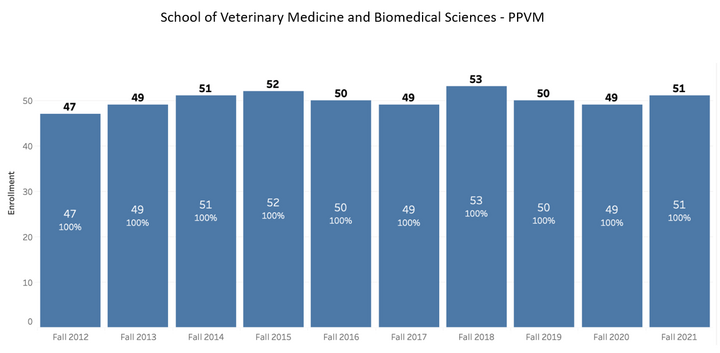
The first class matriculated in fall 2007 and graduated in spring 2011. Under the joint agreement, ISU agrees to enroll no fewer than 25 qualified Nebraska resident students each year. The typical combined UNL and ISU class size is approximately 166 students. Recent enrollment totals are shown in Figure 7.
Since 2017, 133 Nebraska students have matriculated, 128 have graduated, 102 are currently enrolled and 7 have left the program. The primary reasons for attrition are withdrawal due to personal reasons (3 out of 7) and dismissal based on academic standards (4 out of 7).
PPVM Tuition and Fees
As part of the joint agreement, UNL students are charged ISU resident tuition rates for all four years. ISU establishes the tuition rate. UNL pays ISU the difference between the resident and non-resident rate for students during their third and fourth years. While at UNL, students pay UNL student fees, and UNL bills and collects tuition. While at ISU, Nebraska students pay ISU student fees, and tuition is billed and collected by ISU.
Faculty and Staff
Currently 22 UNL faculty members (and one from ISU) contribute to the instruction of PPVM students during the first two years. One faculty member (PPVM coordinator) is also responsible for administrative oversight of the program. In addition, four staff members (administrative support associate, curriculum and student affairs specialist, teaching lab coordinator, and lab technologist) contribute to administrative functions and assist with instruction of PPVM students.
Facilities

The primary classrooms are VBS 103 (maximum seating 54), VBS 145 (maximum seating 66), and NVDC 101 (maximum seating 60). Animal Science D104 (maximum seating 32) is available as an overflow classroom. Laboratory space includes Animal Science D116 (anatomy lab, maximum seating 30 students) and NVDC 114 (biosecurity level 2 laboratory, maximum seating 32 students; Figure 8). The former is used for anatomy and neuroanatomy while the latter is used for histology, pathology, microbiology, and parasitology. Clinical teaching spaces include rooms 117, 119, 123, and 129 in the VBS Annex. These spaces are equipped and utilized for small animal examinations, medical procedures, radiology, ultrasonography, and surgery. These spaces also include a Clinical Skills Laboratory furnished with models and equipment used to train students in live animal, clinical skills techniques. Additional instruction with companion animals occurs in the medical and surgical facilities at the Capital Humane Society Admissions and Assessment Center. Instruction with food animals and horses occurs within the Animal Sciences Complex and at GPVEC.
Program Strengths and Opportunities
The PPVM provides Nebraska residents access to an AVMA accredited veterinary educational program. Through the UNL/ISU CVM agreement, Nebraska students are able to pay ISU resident tuition. This, coupled with staying in Nebraska for the first two years of their education makes the program economical and convenient for the students, while also helping to keep state dollars in Nebraska. The small class sizes benefit studentfaculty interactions, teaching methods and hands-on experiences. Furthermore, approximately two-thirds of PPVM alumni have returned to Nebraska to practice veterinary medicine (Appendix 10, available upon request).
Program Challenges
With enrollment limited to Nebraska residents, it is challenging to significantly grow the program and still maintain a high-quality cohort. While instructional depth has increased in certain content areas, a small number of faculty (7 of 22) is still responsible for delivering 62% (49 of 79 credit hours) of the instruction for the core curriculum. Staff teaching assistance is limited (one teaching assistant for anatomy laboratories, one teaching assistant for surgery and foundation of veterinary medicine laboratories) with most courses having no teaching assistance. Furthermore, administrative support is limited to two staff members. Since there are limited services provided to professional students on a university-level, most academic assistance is coordinated and provided by PPVM faculty and staff.
There’s limited ability to develop the PPVM curriculum because the curriculum is governed by ISU. Since the degree is granted by ISU, not UNL, there’s limited awareness that Nebraska has a professional program. Challenges exist for students interested in a dual degree program (e.g., MS, MPH, MBA). Other constraints are the admission requirements which are governed by ISU and the tuition and fees which are set by ISU.
Vision
To strengthen and enhance the PPVM by providing quality and affordable education that emphasizes animal and clinical experiences.
Goals
- Optimize the use of the Great Plains Veterinary Educational Center, Nebraska Veterinary Diagnostic Center, and other resources to provide exceptional animal and veterinary experiences
- Explore partnering with additional veterinary colleges to allow growth from out-of-state students
- Establish a joint DVM degree with ISU in accordance with the original agreement to help increase the visibility of Nebraska’s professional program, recognize the efforts of SVMBS faculty and staff, create D.V.M. UNL alumni and allow the potential for UNL to establish its own tuition rates.Graduate Program
Graduate Program
Program Coordinator/Graduate Committee Chair
The SVMBS Graduate Program is an interdepartmental program governed by the UNL Office of Graduate Studies (OGS) and based in the School of Veterinary Medicine and Biomedical Sciences. Administrative support for the program is provided by SVMBS. There are 20 active graduate faculty (17 in SVMBS and three courtesy) with full graduate faculty status approved by OGS. Typically, these are tenure-track faculty. There are three faculty members with associate graduate faculty status.
The SVMBS Graduate Committee oversees the graduate program. The committee has the authority and responsibility to examine, study and establish procedures and policies for all matters regarding the curriculum, admissions, and academic standards/ performance for the program. The committee chair provides guidance for issues that may arise and serves as the primary contact for graduate students and the Office of Graduate Studies.
Degree Programs
SVMBS offers an M.S. in veterinary sciences and a Ph.D. in integrative biomedical sciences.
M.S. in Veterinary Sciences
This degree prepares students for careers in the veterinary and biomedical fields. They can further focus the degree program by choosing from two options.
Option I — Provides postgraduate education in veterinary/biomedical disciplines and training in research technology and philosophy. Requirements include a research project, thesis, and minimum of 30 credit hours.
Option II — Broad-based program for students with special interest in diagnostic or clinical veterinary medicine, animal production or other interest with lesser research objectives. Requirements include a minimum of 36 credit hours and a creative component demonstrating scholarly accomplishment (case report, literature report or research project).
Ph.D. in Integrative Biomedical Sciences
The Ph.D. program provides training in biomedical sciences with emphasis on veterinary sciences, human and/or animal health. Two major areas of emphasis currently exist in the program: 1) host-pathogen interactions and infectious diseases, and 2) pathogenesis of human disorders.
Students must pass a comprehensive exam for candidacy. A minimum of 90 credit hours are required, and students must register for the SVMBS seminar series each semester until the degree is completed. Other requirements include completing a dissertation and a final examination.
Seminar Series
SVMBS hosts a spring and fall seminar series featuring 15 speakers per series. Attention is given to inviting a mix of speakers from inside and outside the University of Nebraska. Typically, each series is composed of four speakers from outside the university, four to six SVMBS faculty and speakers from within the University of Nebraska system, and five or more graduate students and postdoctoral fellows. Graduate students are required to present their work as well as attend and participate in seminars.
Recruitment
The graduate program has open enrollment at the beginning of fall semesters. There is not a formal recruitment program or process for interested students. Students applying are usually attracted based on the research programs described on the SVMBS website. Individual faculty also actively and independently recruit highly qualified applicants during visits to other institutions, research labs, and while attending recognized scientific conferences in their corresponding fields of research. The chair and/or personnel from the UNL Office of Graduate Studies attend recruitment events for biomedical sciences graduate programs to disseminate information regarding the program. Information is disseminated via fliers.
Admission
While the School determines whether to accept a graduate student into its program, formal admission into the University of Nebraska Graduate College is completed through the UNL Office of Graduate Studies. The Office of Graduate Studies ensures that all necessary application materials are submitted and provides formal notice of admission. Applications must be submitted by January 15 of the year prior to the semester in which a student plans to enroll. Additionally, rolling admission of graduate students can be expanded as requested by faculty members for students off-cycle to any period. Such students can be admitted on an exceptional case-by-case basis (such as when grant funding becomes available).
Enrollment
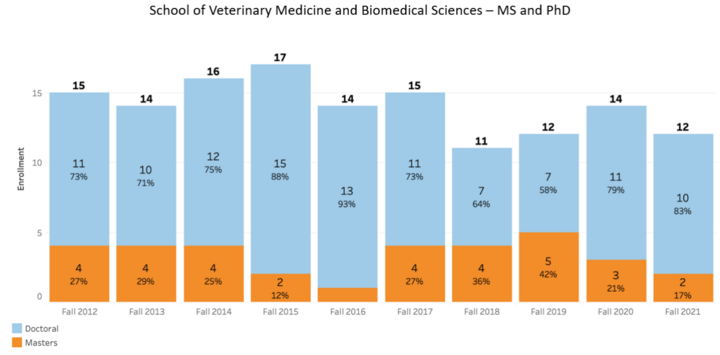
Currently, 14 Ph.D. students (11 international) and two M.S. students (one international) are enrolled in the SVMBS graduate program. Recent trends in graduate program enrollment are shown in Figure 9.
Program Strengths and Opportunities
The SVMBS graduate program provides opportunities for those wishing to earn an M.S. degree or Ph.D. Graduates are prepared for careers in academia and industry, with emphasis on biomedical fields (animal and/or human health). There is a strong framework of graduate courses offered within the department, and include advance training in virology, microbiology, immunology, and signal transduction/biomedical sciences. Traditionally the program’s strength was in a robust animal-health focused research program that spanned basic and applied research and trained numerous animal health professionals throughout the United States. A historical listing of completed programs is included in Appendix 10 (available upon request). There were other PhD graduates in programs administered in partnership with UNMC (prior to the establishment of the Integrated Biomedical Sciences program of the SVMBS.
Program Challenges
The SVMBS master’s degree program (Master of Science in Veterinary Sciences) is currently under review by the Nebraska Coordinating Commission for Postsecondary Education because the numbers of enrollees and graduates have been below the Commission’s standards for the degree (five graduates per year; see Figure 7). SVMBS is developing a plan to respond to the review and to continue training students in the School. This report will be drafted by December 2022 and presented to the Commission and Nebraska Board of Regents in early 2023.
There is currently no appropriated funding available for graduate assistantships in the SVMBS base budgets, and so the strength and number of graduate students is based on the graduate faculty’s ability to secure external funding to support students, which is inherently variable. To compound this challenge, since the last Academic Program Review we have lost at least five full-time faculty with primary research appointments. External funding, and thus graduate student support, has been stable but insufficient to support increasing numbers of graduate students. Additionally, there is no formal student recruitment or retention plan. There are limited staffing resources to support graduate students, as a single staff member serves as both departmental and graduate secretary. To attract quality applicants, the program needs to expand and improve recruitment efforts. The SVMBS program needs to improve means to recruit and support graduate students. Options to achieve these goals are included in the Goals section.
Vision
The graduate program will provide quality training in biomedical sciences and animal health with an emphasis on host-pathogen interactions and infectious diseases.
Goals
- Expand and diversify the M.S. degree options for professional residency programs
- Explore opportunities for students to pursue advanced graduate study to enhance their competitiveness for professional programs
- Explore potential to enhance accessibility to graduate training for off campus students.
- Enhance and improve recruitment efforts to attract quality students
- Develop alternative educational opportunities that could expand career paths for graduates
- Expand the number of graduate faculty that can participate in graduate education Explore opportunities for professional students and practicing DVMs to receive specialty training (preventive medicine, epidemiology, etc.)
- Aggressively seek resources to strengthen the program
- Provide a more structured training for SVMBS graduates
Nebraska Veterinary Diagnostic Center and Extension
Description
The Nebraska Veterinary Diagnostic Center (NVDC) is committed to serving the livestock and animal health industries in Nebraska and across the region. It’s a mission the NVDC has successfully carried out since its inception in 1894 when the Department of Animal Pathology at the University of Nebraska (forerunner of the School of Veterinary Medicine and Biomedical Sciences) incorporated diagnostic services into its outreach activities. This legacy of service to Nebraskans is impressive and recognizes the importance that early constituents placed on the need for diagnostic facilities since Nebraska only was incorporated as a State in 1867 and the University was chartered in 1869.
The NVDC is a service unit that operates in a competitive diagnostic community to serve clients. Through the services provided to clientele, the NVDC generates revenue through fees. The NVDC must balance the concern of per test fee recovery with the need to remain competitive and innovative to realize total revenue growth. The NVDC recognizes and embraces the mission to protect public health and animal resources through disease diagnostics and surveillance. The impact of diagnostic work extends far beyond the individual case or client.
These realities require integration of IANR research investment directed towards contemporary and emerging animal health, public health, and production concerns unique to our region. Integration of outreach to identify these unique concerns is also critical. Diagnostic discovery and innovation impacts animal welfare, the economic viability of food production, and human well-being in the state. Investment in discovery also provides for detection and control of emerging pathogens and disease syndromes, and development of diagnostic tools for control. Expertise and equipment in the NVDC can be leveraged through expanded collaboration with scientists across campus and to other campuses through competitive grants to explore animal disease and comparative medical science more deeply.
The NVDC has had historic successes. The discovery of rotavirus, pseudorabies detection methods, vaccination improvements, BVDV detection technologies, PRRS virus detection and vaccine development, recognition of the nature of emerging inherited diseases of cattle are but a few examples of diagnostic research leveraged with extramural grant funding, that enhance diagnostic fee generation, and most importantly benefit animal health and the economic bottom line of Nebraska producers. Faculty expertise is leveraged in collaboration with biomedical researchers across campus, in areas of microbial pathogenesis, immunopathology, blast injury, vaccine development, and arthritis.
Current faculty members have recent history of participation in multidisciplinary research projects while also teaching veterinary students in the Professional Program in Veterinary Medicine and undergraduate students, training pathology residents, and delivering outreach activities that maintain and strengthen contact between the university and its stakeholders.
In September 2017 the NVDC moved into a new building that provided nearly four times the space and state-of-the-art equipment. The Nebraska Legislature, the university and private donors made the $44.7 million commitment to the state’s livestock, animal, public health, and biomedical research interests. The following objectives identify opportunities to strengthen the services provided by the NVDC, especially as relevant to AAVLD accreditation and NAHLN certification.
Objective 1: Innovative discovery to protect animal health, promote well-being and safeguard the food supply
Next generation advancements in science and medicine frequently occur when an interdisciplinary approach to research is taken and leading-edge technology is applied to improve scholarship and service output. There is tremendous potential to increase the scope and effectiveness of NVDC services through discovery and scholarship.
Potential Outcomes
- Increase engagement to conduct interdepartmental research, such as 1) Animal Science Department: Porcine reproductive and respiratory disease, emerging genetic disorder of cattle, 2) Biological Systems Engineering: Composting swine carcasses infected with porcine epidemic diarrhea virus (PEDV), and PEDV survival in the environment, 3) Nebraska Center for Virology: Porcine reproductive and respiratory disease virus, Ebola virus, and Zika virus, 4) U.S. Meat Animal Research Center: Bovine respiratory disease and bovine keratoconjunctivitis, and 4) SVMBS: Autoimmunity, Johne’s disease and MRSA, E. coli , and redox biology.
- Train more pathology and microbiology residents to prepare the next generation of researchers, diagnosticians, and teachers.
- Increase refereed journal articles and book chapters.
- Recruit staff member to clinical research lab.
- Further develop new technology applicable to both diagnostic service and research as is currently being employed in the VDC with MALDI-TOF mass spectrometry.
Objective 2: Expansion of services to safeguard animal and public health and well-being
Tests that serve the poultry industry emerged as a priority opportunity. The number of poultry flocks in the state is increasing rapidly due to the largescale commercial investments made by HendrixISA, which operates a 24-million-layer chick hatchery near Grand Island, and Lincoln Premium Poultry/Costco, which opened a plant in Fremont in 2020 to process an estimated 104 million broilers per year. It’s expected that the need for diagnostic services related to poultry will increase substantially over the next several years. The swine industry is also a sector the NVDC must be able to assist more effectively. We must still work to sustain a high level of beef and companion animal service.
Potential Outcomes
- Increase diagnostic technologies that serve the state’s growing poultry industry (e.g., National Poultry Improvement Plan testing).
- Increase diagnostic service technologies needed to serve the large-scale swine industry and other sectors such as companion animal and beef.
No formally trained diagnostician in poultry diseases or management existed in the NVDC. The leadership positions currently filled by the fortuitous arrival of Dr. Don Reynolds into the NVDC has allowed substantial progress and growth in this area. Dr. Reynolds serves as an outreach veterinarian to the industry, consulting on biosecurity and disease management. He is a liaison with the industry and assesses needs and opportunities for both service and research. Staff have been added to assist with current growing test demands, particularly in sample receiving and molecular diagnostics. Rabies testing has also been a significant growth area in the new laboratory.
There is perceived opportunity to expand services for large-scale swine producers. To accomplish this the NVDC replaced its laboratory information management system – LIMS – with one compatible with those used by the major swine producers. LIMS has the ability to export data in formats that more easily can be input into customer databases. Information is shared directly with clientele who utilize diagnostic services for health monitoring and management, and with state and federal officials for regulatory purposes. The poultry growth could serve as a model for swine programs. We must restore swine outreach to support swine biosecurity programs and to identify emerging research needs. Currently, the NVDC diagnosticians are coordinating low volume testing and some viral research in swine but in a passive reactive manner. The industry is left to seek support out of state for much of its diagnostic and research needs.
Objective 3: Strategic engagement with veterinarians and other stakeholders
NVDC diagnosticians support a broad array of veterinarians in Nebraska and throughout the central US. Diagnosticians in the NVDC are often the first to recognize an emerging trend or disease and are counted on to share the information with the veterinary community. Recent examples include trichomoniasis in cattle; porcine reproductive and respiratory syndrome, circovirus, and porcine epidemic diarrhea and coronavirus infections in swine; and avian influenza in commercial poultry flocks.
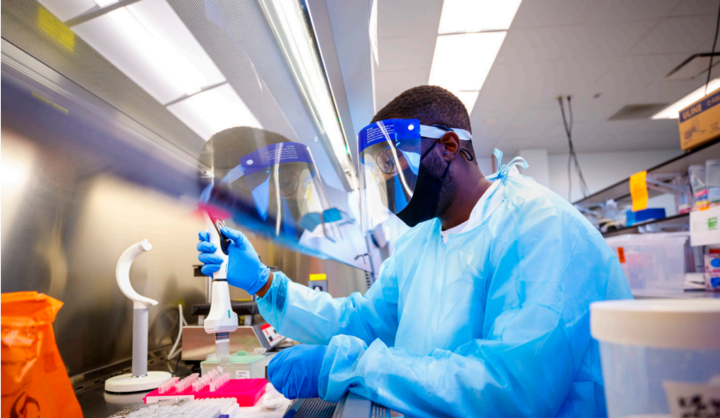
Diagnosticians are invited to present continuing education programs related to animal and human disease trends, NVDC activities, specific conditions, and emerging diseases. This interaction is an important component in safeguarding animal health in the state and reinforcing the need to maintain a strong diagnostic laboratory capable of providing timely and accurate results in the event of declaration of an animal or human health emergency. One example is the COVID-19 pandemic, as exemplified by the saliva-based PCR test Figure 10.
Potential Outcomes
- Utilize the new NVDC to increase frequency of continuing education opportunities for veterinarians.
- Increase presence with stakeholders (producer meetings, breed organizations, commodity groups, etc.).
- Extend the scope and range of information delivered to Nebraska stakeholders by effectively disseminating information to Nebraska veterinary practitioners, who in turn can share it with clients.
Objective 4: Integration of diagnostic and extension services
The impact of extension activities and NVDC outreach are greatest when there is ongoing collaboration and integration. Integrating extension into the NVDC creates the potential to deliver more programming focusing on animal health and emerging issues or disease. The integration of outreach in all objectives that tie to our constituents is essential.
Potential Outcomes
- Develop a more integrated approach to health surveillance for beef production systems.
- Link extension veterinarians at Great Plains Veterinary Educational Center, West Central Research and Extension Center and East Campus to facilitate idea and information sharing.
- Improve linkages between extension veterinarians and diagnosticians to provide research-based results for clientele.
- Continue interdisciplinary collaboration with the Beef Systems Initiative Grazing Study utilizing the SVMBS cow herd at ENREC.
- Maintain the tremendous service provided by the UNL Birthing Pavilion and other activities at the Nebraska State Fair.
- Focus on meetings where engagement with stakeholders and producers is possible. • Continue outreach to the poultry industry.
- Revitalize outreach to the beef and swine sectors while not ignoring companion animals.
NVDC Summary
The NVDC is well resourced with facilities and equipment. The new facility is designed and equipped to increase its impact on animal health through discovery and expand its leadership profile through scholarly work and education. Outstanding facilities and technology, however, are not enough. The inability for faculty members to devote time to the objectives listed is the greatest that has ever been experienced by the current NVDC faculty. Without an increase in faculty FTE, the NVDC can only continue to provide diagnostic services, limited high-quality collaborative scholarly activity, and some teaching. Important outreach, research and growth in service areas will continue to be limited and might very well decline due to limited industry connection.
The NVDC has done exceptionally well in meeting the challenges that have arisen due to decreasing FTE over the last five years. NVDC faculty members have shown dedication and flexibility and have continued to lead the way in veterinary diagnostic medicine; however, the capacity to do even more is simply not there.
To achieve the objectives listed above, the NVDC needs to restore and maintain faculty FTE in pathology and virology. The laboratory must integrate two additional outreach and research faculty positions related to beef and swine sectors in the role of outreach and research veterinarians based in the Lincoln laboratory facility (Table 3). With these additions, service caseloads will be adjusted, allowing more time to participate in interdisciplinary scholarly activities and engage stakeholders through outreach, while continuing to make significant teaching contributions to veterinary students in the PPVM. Faculty members also will have more time to devote to resident training, an important activity to ensure the training of future pathologists and microbiologists.
Residents are graduate veterinarians who receive additional specialty training in their specific field of interest. In addition, their broad training as a veterinarian and the additional training received during their residency/graduate program makes them uniquely qualified to contribute across all the missions of the laboratory. Residents act as multipliers which allows the service and teaching workload to be spread among a greater number of individuals, thus increasing the potential for all the pathologists and the microbiologist to engage in other scholarly and teaching activities.
UNL Great Plains Veterinary Educational Center
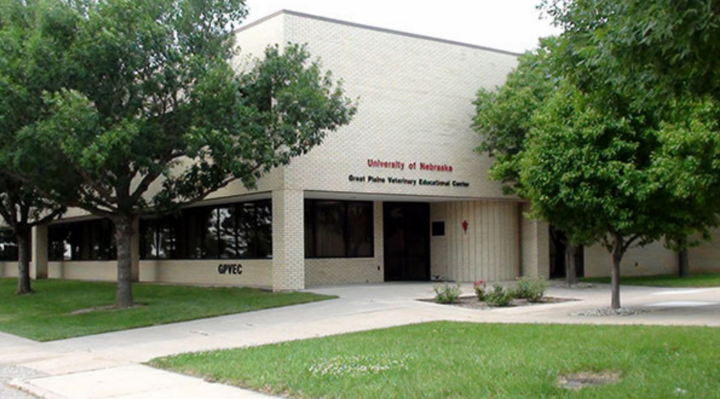
The University of Nebraska Great Plains Veterinary Educational Center (GPVEC; Figure 11) began in 1989 as part of a cooperative agreement for veterinary medical education between Kansas and Nebraska. Through this agreement, initiated in 1986, 25 academically qualified Nebraska residents were accepted at the KSU College of Veterinary Medicine at in-state tuition. KSU had a required core rotation as part of their curriculum and all seniors were to attend GPVEC for their core rotation. In 2008, the contract was awarded to Iowa State University, which was part of the 2+2 program that required that veterinary students enrolled in the Professional Program in Veterinary Medicine spend their first two years at the University of Nebraska and their final two years at Iowa State University. Although the ISU students did not have a required core curriculum at GPVEC, their senior students have the first opportunity to sign up for special electives. In return, 25 Nebraska residents are admitted to the College of Veterinary Medicine at ISU.
A Food Animal Production Medicine Consortium was developed involving six universities (University of California-Davis, University of Florida, University of Illinois, Kansas State University, Michigan State University, and the University of Nebraska-Lincoln) and continuing during 1989-1998. The consortium students also attended GPVEC for special electives. The primary idea of the consortium was an exchange of veterinary students to provide in-depth education in species-specific production medicine and to develop collaborative programs with other colleges.
Since GPVEC’s inception more than 4,000 students have walked through the doors seeking training in veterinary medicine in specific areas of interest such as calving, lambing, feedlot management, bull breeding soundness, pregnancy examination, bovine reproduction, equine dentistry, and gomer bull surgeries. GPVEC’s recognition has been largely credited to its close proximity to the U.S. Meat Animal Research Center due to the large herds of animals to which the GPVEC assists in providing veterinary service. The USMARC is the third cooperating institution in the GPVEC program by providing access to these large herds for veterinary education.
In addition to training veterinary students, GPVEC has offered various continuing education seminars the past 25 years including the development of the Beef Cattle Production Management Series, which is nationally and internationally recognized. The program began in 1993 and continued through 2008 as a yearlong program for practicing veterinarians seeking an indepth study course resulting in Certification in Beef Cattle Production Management. Since the beginning of the program, 158 practicing veterinarians from 25 states and Canada have participated. During the last few years of the program, it was established as credit courses that could be applied towards a master’s degree in which several of the participants furthered their education to earn their degree.
What started out as a simple approach to making a veterinary education available to Nebraska residents has touched numerous students nationally and internationally over the past 25 years, not to mention the continuing education provided to practicing veterinarians.
Research Programs
The School of Veterinary Medicine and Biomedical Sciences is strong in the area of infectious diseases and neurobiology. It is becoming increasingly clear that to control the spread of infectious diseases, a greater understanding of the interactions between pathogen and host is needed:
- How does the host respond to pathogens?
- How do pathogens persist outside the host in the environment?
- How are pathogens transmitted to susceptible hosts?
- How are pathogens and host disease states identified?
The UNL community has created a set of Grand Challenge objectives for responsible research (UNL | Grand Challenges). Three of these objectives are addressed by SVMBS research programs:
- Sustainable food and water security
- Health equity
- Climate resilience
The SVMBS has strong programs in STEC food safety; molecular virology (cell biology, pathogenesis, immunology, and vaccinology); mycobacterial infections of ruminants, emerging and re-emerging viral diseases of swine (PRRS, ASFV); bovine respiratory disease and congestive heart failure; poultry pathology and medicine; as well as diagnostic pathology. These research programs are described within faculty biographic descriptions in Appendix 2 (available upon request).
SVMBS also has a strong program in neurobiology (neurobiology, neurovirology and neurotoxicology), investigating the biology of circadian rhythms, the pathogenesis of neurodegenerative disorders, and infectious processes by which viruses affect the nervous system. This research extends from the molecular through the population level and addresses mechanisms of disease, population medicine and related topics in biomedical research.
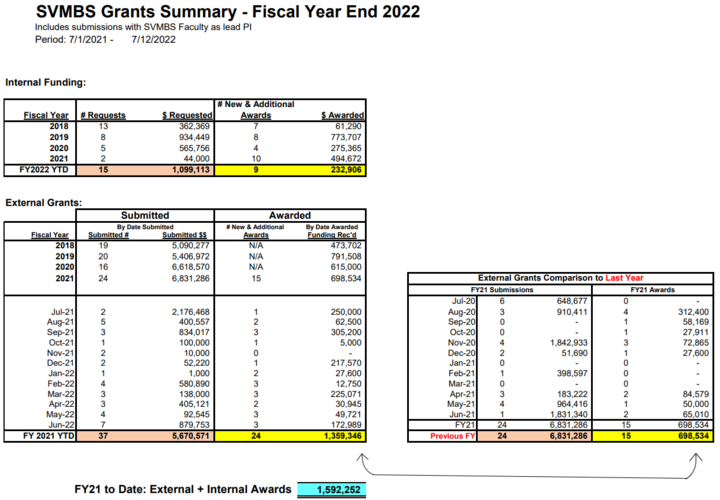
In all aspects of our research, the program emphasizes collaborative efforts toward advancement of biomedical knowledge. The collective scientific knowledge and skills are used for the benefit of the society at large through the protection of human and animal health, the relief of animal suffering, the conservation of livestock resources, and the promotion of public health and a safe environment. Recent extramural funding has been reasonably successful (Figure 12 and Appendix 7A and 7B, available upon request). The areas of study and the faculty who are conducting research in each area with additional detail can be found (organized by disciplines and scientists) at: Research | School of Veterinary Medicine and Biomedical Sciences (unl.edu). Also, pending and current grants and contracts are listed in Appendix 7A and 7B, available upon request).
Nebraska Center For Virology
An important collaborative support center at UNL is the Nebraska Center for Virology (NVC) Their mission statement follows:
- Established in the fall of 2000 under the NIH Institutional Development Award (IDeA) program.
- Combines the expertise of Nebraska’s leading biomedical research institutions: University of Nebraska-Lincoln, University of Nebraska Medical Center, and Creighton University.
- Research programs focus on important viral diseases of humans, including HIV-1, Kaposi’s Sarcoma and herpes, as well as viruses within plants and animals.
- Supported by the Center’s four core facilities: Flow Cytometry, Proteomics, Microscopy, and Bioinformatics.
- Faculty engage in mentoring young scientists and students from the U.S. and abroad and seek to attract more researchers to Nebraska.
Background
Viruses are the simplest of biological systems, consisting only of protein and nucleic acid and incapable of reproducing themselves without a host. Yet viruses have made a huge impact on 20th century life, from their role as infectious agents in devastating diseases like smallpox, influenza, human immunodeficiency virus, and coronaviruses (SARSCoV2) to their use as one of the key tools in the quest to decipher the workings of the gene. Virology research in Nebraska ranges across disciplines and into the frontiers of research, exploring the basic nature of viruses and their potential applications for diagnosis and control of diseases in plants, animals, humans and the environment.
Vision
The NCV’s aim is to establish a nationally recognized center for biomedical research excellence. The NCV will accomplish this by establishing an infrastructure that connects these three schools’ (University of Nebraska-Lincoln, University of Nebraska Medical Center, and Creighton University) excellent virology programs and drawing bright new investigators with similar research interests to Nebraska.
Purpose
The NCV’s overall goal is to increase competence in biomedical essential virology areas by:
- Creating a multi-disciplinary atmosphere that encourages cross-fertilization and the development of a new generation of inventive researchers with a thorough understanding of the entire subject of virology.
- Creating collaborations between basic and clinical researchers working with human, animal, and potentially crucial plant systems with the unifying goal of elucidating viral pathogenesis and replication mechanisms. Understanding these basic processes will allow for the development of new vaccinations and therapeutic ways to combat disease.
- Conducting ground-breaking research into infectious pathogens and the host responses that can result in pathological changes, particularly neuropathogenesis and apoptosis.
Conclusions
SVMBS is a long-standing program within IANR and CASNR. The core missions have been research, undergraduate and graduate teaching, the PPVM, extension, and operation of the state of Nebraska’s accredited veterinary diagnostic laboratory. Over the course of the School’s history and into the present, there have been (and will continue to be) significant shifts in stakeholders, clientele, students, the collective sciences of veterinary medicine and animal health, as well as the relevant standards of practice. These changes require attention, with a renewed urgency, to both the scientific and the social needs of Nebraska. The SVMBS must also recognize and serve our region and many global communities.
In summary, the mission of the SVMBS is to provide the educational and scientific discovery service to support animal health as well as the general well-being of the animals and their caretakers. The diversity of the caretakers, in the broadest sense, will continue to increase. Also, the needs of the food animal industry and society in general will continue to evolve. Clearly, all of these interactions are important and deserve full attention. And, sustained delivery of One Health medicine requires consideration of the global ecology.
SVMBS, CASNR, and IANR have demonstrated an ability to respond to critical evaluations and recommendations. There have been successful mission-driven initiatives to address very specific needs related to stakeholders (food animal health and sustainable production) and One Health (epidemiology of zoonotic diseases). In order to continue this success, the SVMBS must address some key major challenges:
- Successful management of faculty successionsecuring a diverse and talented faculty for the future.
- Recruiting and retaining a diverse and talented pool of students for all SVMBS educational programs.
- Identification of mechanisms and resources for sustainable and steady growth of SVMBS.