NVDC Newsletter Summer 2026
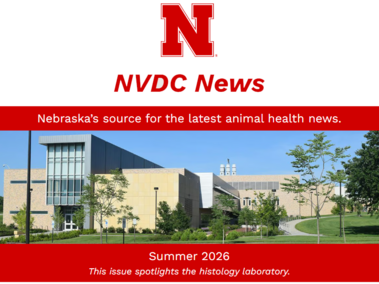
Inside the Histology Laboratory
By Kristen Reynolds
The Histology Laboratory plays a vital role in supporting the Nebraska Veterinary Diagnostic Center by providing high-quality tissue preparation for diagnostic pathology. Our team of three full-time histology technicians and a laboratory manager process approximately 100 tissue cassettes each day, with specimens being grossed, embedded, sectioned, stained, and digitally scanned for pathologist review. In addition to routine hematoxylin and eosin (H&E) staining, the laboratory also performs a variety of special stains and immunohistochemistry (IHC) to aid in complex diagnoses.

This year, the laboratory expanded its capabilities with the addition of the KOS microwave tissue processor. This advanced technology significantly reduces tissue processing time, allowing many small biopsy specimens to be processed and diagnosed the same day they are received. Faster turnaround times help clinicians provide more timely treatment decisions while maintaining the high-quality tissue preservation required for accurate diagnosis.
Beyond diagnostic testing, the Histology Laboratory also supports a wide range of research projects from investigators across the University of Nebraska. By combining advanced instrumentation, skilled technical staff, and efficient workflows, the laboratory contributes to both animal health and scientific discovery through reliable histologic services.
Understanding Antimicrobial Resistance and Susceptibility Testing
Understanding Antimicrobial Resistance and Susceptibility Testing
By Dr. Dustin Loy
Antimicrobial resistance (AMR) refers to the ability of microorganisms to resist the effects of antimicrobial drugs and therapies, resulting in treatment failure and reduced disease control. AMR is a “One Health” concern because it has implications for human, animal, plant, and environmental health. AMR occurs when a wild-type pathogen acquires genetic information, such as a resistance gene or mutation, that provides resistance to an antimicrobial drug.
Veterinary diagnostic laboratories, such as NVDC, support the identification and monitoring of AMR through microbial identification and antimicrobial susceptibility testing (AST). The primary method used by our laboratory for AST is broth microdilution, in which an isolated pathogen is exposed to increasing concentrations of antimicrobial drugs to determine the minimum inhibitory concentration (MIC), or the lowest concentration of a drug that inhibits growth of the organism.
The laboratory uses a variety of testing panels, which are sets of antimicrobial drugs and concentrations selected to be relevant to the patient host species and pathogen of interest. MIC results are evaluated using clinical breakpoints established by standards organizations. These breakpoints are based on the pharmacology of the drug in the host, the biology of the pathogen of interest, and clinical outcome data. This information allows the laboratory to classify an isolate as susceptible, intermediate, or resistant and provides valuable guidance for treatment selection when combined with patient history and clinical findings.
One challenge of this approach is that limited breakpoint information is often available for infrequently encountered pathogens, atypical host species, or older antimicrobial drugs. In these situations, the laboratory may report the result as Non-Interpretable (NI) due to insufficient data to support interpretation. Importantly, an NI result does not indicate that the organism is resistant or that the drug will be ineffective; rather, it indicates that established interpretive criteria are not available. These results may still provide clinically useful information when considered in the context of the patient and disease presentation.
Diagnostic laboratories are an important partner in antimicrobial stewardship. By combining culture and susceptibility testing results with clinical expertise, veterinarians can make informed treatment decisions while helping preserve the effectiveness of antimicrobials for both animal and public health.
Key takeaways
- AMR occurs when microorganisms acquire genetic traits that reduce susceptibility to antimicrobial drugs.
- Broth microdilution testing determines the minimum inhibitory concentration (MIC) of an antimicrobial against an isolate.
- Clinical breakpoints allow laboratories to classify isolates as susceptible, intermediate, or resistant.
- Non-Interpretable (NI) results indicate that sufficient breakpoint information is not available and should not be assumed to mean resistant.
- AST results should always be interpreted in conjunction with clinical findings, patient history, and treatment goals.
- Diagnostic laboratories provide essential data to support antimicrobial stewardship and monitor emerging resistance trends.
Additional resources
Antimicrobial-resistant Pathogens Affecting Animal Health (AVMA)
Supporting Veterinarians, Public Health Officials, and Animal Health Professionals Through Timely Rabies Diagnostics
Supporting Veterinarians, Public Health Officials, and Animal Health Professionals Through Timely Rabies Diagnostics
By Dr. Duan Loy
Rabies is a fatal zoonotic disease that requires timely and accurate diagnosis to support animal and public health decision-making. To date, 12 confirmed rabies cases have been identified in Nebraska, all in bats except for a single canine case associated with the south-central skunk virus variant (SCSK). Rabies case data for Nebraska are available on the Nebraska Department of Health and Human Services website. The Nebraska Veterinary Diagnostic Center provides rabies testing services and strives to report results within one business day after receiving samples, under normal operating conditions. We test approximately 1,400 samples per year.
For specimens without human exposure, submitters must complete the NVDC Rabies Submission Form. Cases involving potential human exposure require an RA number obtained through the Nebraska Department of Health and Human Services (NDHHS) before submission.
Proper specimen collection, packaging, and shipping are essential to ensure accurate testing and avoid delays. Samples that are decomposed, damaged, or incomplete may be reported as unsuitable, while samples that cannot definitively confirm or rule out rabies may be reported as indeterminate. Frozen whole brain specimens can still be tested and should be submitted frozen if they have already been frozen.
In certain circumstances, unsuitable or indeterminate specimens may undergo additional testing using the CDC LN34 real-time PCR assay; however, negative or inconclusive results from compromised samples cannot rule out rabies infection.
Through rapid diagnostics, expert guidance, and collaboration with veterinary and public health partners, NVDC plays a critical role in supporting rabies surveillance and protecting the health of Nebraska's animals and communities.
Additional details regarding rabies testing, specimen requirements, report interpretation, shipping guidelines, and frequently asked questions are available through the NVDC Rabies Laboratory FAQ page.
All NVDC Submission Forms are available on our website.
USDA APHIS BSE Surveillance Program
USDA APHIS BSE Surveillance Program
By Debra Royal
Bovine cases submitted for rabies testing may also meet the criteria for Bovine Spongiform Encephalopathy (BSE) surveillance testing. In many instances, the brain samples received do not include the brainstem and obex, which are required for BSE testing. Only bovine samples testing negative for rabies are eligible for surveillance testing. BSE testing is conducted at no cost to the client. Test results are not reported to the client or submitter. No additional documentation, authorization, or action is required on the part of the client. The NVDC requests that when a submission meets the criteria outlined below, the entire brain be submitted so that both rabies and BSE testing can be completed.
Cattle 12 months old or older
Cattle with CNS signs—displaying progressive behavioral changes that cannot be attributed to infectious illness (including but not limited to, apprehension; nervousness; excitability; aggression toward other cattle or humans; head shyness; hypermetria; persistent kicking when milked; difficulty in rising; excessive nose scratching; changes in herd hierarchical status; hesitation at doors, gates, and barriers; or reluctance to cross concrete or other “slippery” surfaces). These include cattle:
- On the farm with a history of or exhibiting clinical signs of CNS disease;
- Classified as rabies suspects (including rabies-negative cases from State or local public health laboratories); and
- Condemned on antemortem inspection for CNS signs or rabies.
Cattle with signs consistent with CNS signs—cattle affected by illnesses that are refractory to treatment (including anorexia, loss of condition in spite of good appetite, pneumonia, and decreased milk yield) and are displaying progressive behavioral changes (including apprehension, nervousness, excitability, aggression, head shyness, hypermetria, kicking when milked, difficulty in rising, excessive nose scratching, or hesitation at gates/barriers).
Cattle of any breed that are 30 months or older exhibiting certain nonspecific clinical signs
Certain cattle, other than those described above, are also valuable to targeted BSE surveillance efforts; however, samples should only be obtained from cattle 30 months old or older (as evidenced by the eruption of at least one of the second set of permanent incisors). Categories of these targeted cattle include:
- Cattle condemned on antemortem at slaughter for any reason other than CNS signs or rabies.
- Non-ambulatory cattle that cannot rise from a recumbent position (i.e., disabled and/or downer) or that cannot walk including, but not limited to, those with broken appendages, severed tendons or ligaments, nerve paralysis, fractured vertebral columns, or metabolic conditions.
Ambulatory cattle at slaughter exhibiting other clinical signs that may be associated with BSE:
- Cattle that are severely weakened though they may be able to stand and walk for brief periods of time; and
- Cattle that were euthanized, or that died as a result of moribund conditions, infectious diseases, emaciation, or injuries.
Cattle found dead
- A clinical history should be obtained for these animals whenever possible.
- Samples should not be collected from dead cattle with known cause of death and/or history that do not meet the criteria for targeted subpopulations (e.g., acute deaths from lightning strike or other acts of nature, fire, dystocia, hypothermia, trauma, etc.).
New World Screwworm Update
New World Screwworm Update
By Dr. Matt Hille
The recent detections of New World Screwworm (NWS) in Texas and New Mexico have raised concerns about spread of this foreign animal pest that was eradicated decades ago. Since 2022, the spread of NWS throughout Central America and Mexico has allowed for continued risk monitoring and proactive planning by US regulatory agencies. Immediate actions being taken to contain and eradicate these incursions include:
- Establishment of control zones,
- Targeted sterile fly releases, and
- Enhanced surveillance and outreach.
NWS is a reportable disease. If you suspect a case of NWS, report immediately to your local accredited veterinarian, the Nebraska Department of Agriculture (402-471-2351) or the local USDA APHIS office (402-434-2300). Additional information can be found in New World Screwworm What You Need to Know on the USDA APHIS website. The FDA’s Center for Veterinary Medicine also has released New World Screwworm: Information for Veterinarians with additional drug related information. For non-suspect diagnostic cases, NVDC can perform identification or referral of adult flies and fly larvae (maggots) as needed.
Larvae Identification Best Practices
- Flies and/or larvae should be placed in sealable containers (e.g., glass vials, plastic vials) with alcohol, preferentially 70-90% ethanol.
- Flies and larvae do not have to be refrigerated or frozen if submerged in alcohol.
- The more larvae submitted, the better, to ensure the presence of identifiable characteristics. Different sizes of larvae, if present, should be submitted.
- Vials should be shipped using ambient temperature packing with absorbent material, placed in a plastic bag to avoid spillage through the packaging, and placed in a rigid box.
- Samples can be submitted using our ruminant submission form with a test request for Parasite ID.
- Mailing labels can be ordered and printed directly from our Shipping webpage.
- Samples may be required to be forwarded to USDA for confirmatory identification. There is no additional cost for this.
Contact us with your questions
For fly specific questions:
Roberto Cortiñas, DVM, Ph.D.
Professor of Practice
School of Veterinary Medicine and Biomedical Sciences
University of Nebraska–Lincoln
113 VBS, Lincoln, NE 68583-0905
Phone: 402-472-6502
Email: rcortinas@unl.edu
Other questions:
J. Dustin Loy, DVM, Ph.D., Dipl. ACVM
Professor and Director
Nebraska Veterinary Diagnostic Center
School of Veterinary Medicine and Biomedical Sciences
Phone: 402-472-1434
Email: jdloy@unl.edu
Employee Spotlight
Employee Spotlight
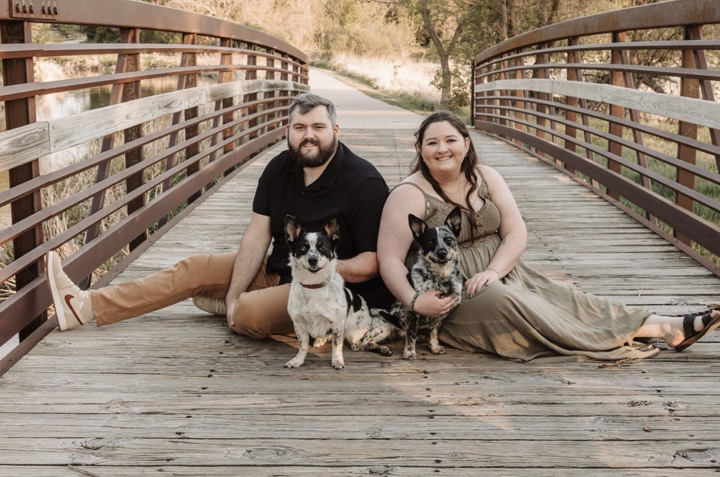
My name is Jayden Robinson. I am originally from Funk, Neb. I grew up with a large family of five siblings, and I currently have 10 nieces and nephews.
I spent a lot of time with my grandpa on his farm as a child and that is where my passion for animals came from. I was very active throughout school in various activities, but my favorite ones were 4-H and FFA. I showed pigs for 10 years while active in 4-H, which has given me a little bit of bias over pigs being one of my favorite animals.
I have been working in veterinary medicine for the past five years at mixed practice and emergency clinics. I attended the Nebraska College of Technical Agriculture and received my Veterinary Technician degree in 2023. I recently joined NVDC in January as a research technician in the bacteriology department.
I love putting together puzzles, spending time with my dogs, and collecting anything mushroom themed. I will be getting married in November to my fiancé Christian. Together, we have two corgi-blue healer mixes named Mack and Millie and a bunch of fish.
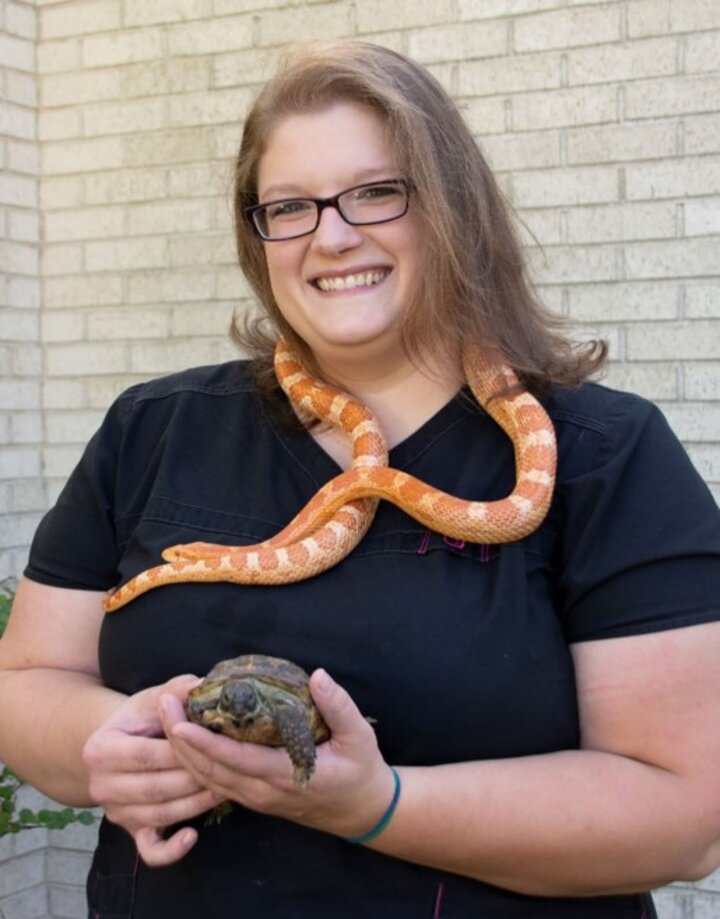
I'm Nicole Rettig. I've been with the NVDC since October of last year. Before that I worked as an LVT for 13 years, after graduating from NCTA. I have always had a love for all animals and own a variety of misfit creatures. When I am not with my animals, I'm generally doing some sort of craft to keep busy.
Employee Pet Spotlight
Cats rule at Marisa Kibbie's home
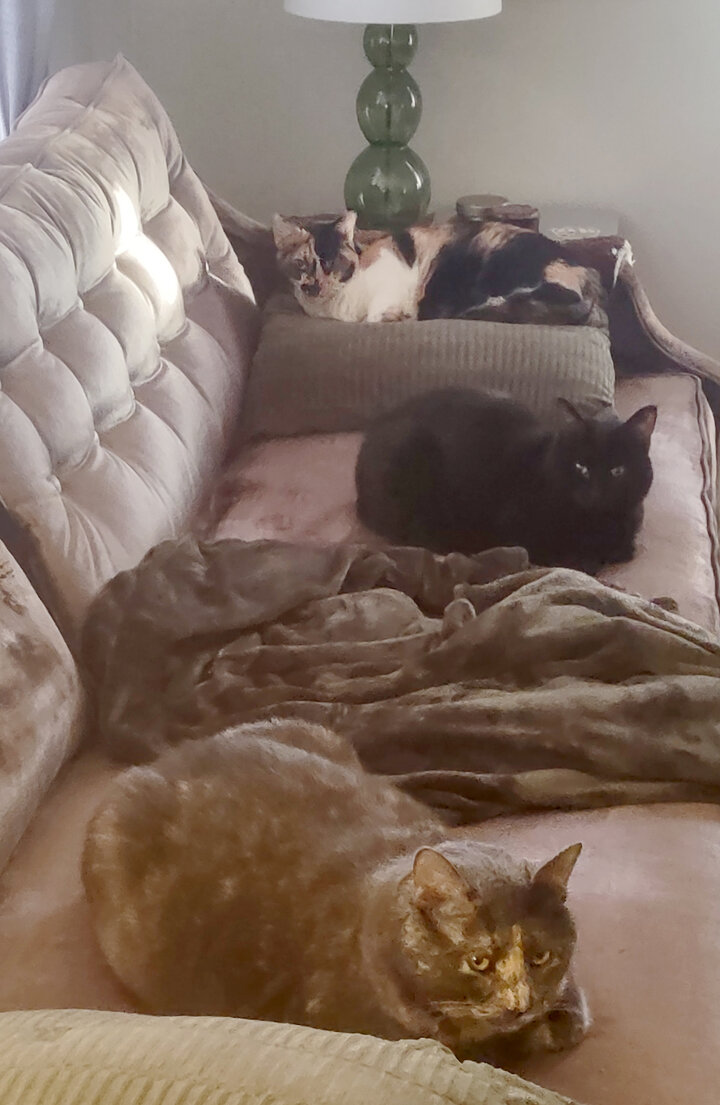
At my house there are more cats than people. Having five means there is never a dull moment!
My eldest two are littermates, Ivy and Hazel. Ivy is a true calico and enjoys letting me know when the food dish is getting low. She’s an advocate for the hungry and loves pets. Hazel is a patch tabby, calico colors but striped, she’s the tyrant of the house. She enjoys beating up on her sisters, but is so sweet to humans—a lap cat at heart. Next is Fern, she’s my chubby darling, a dilute calico. Fern enjoys displaying her belly, which is very soft but definitely a trap! Then comes Juniper and Clover, our black cats and house panthers. Juniper is an excellent guard cat and peacemaker of the house. She can always be found near her humans and likes to help her mom with crafts. Clover is the baby of the family. She enjoys doing whatever Juniper is doing or being in the window looking outside at birds and, her favorite, squirrels.
It may be hectic at times, especially when the wet food comes out, but I wouldn’t trade my army of cats for anything.